The short answer
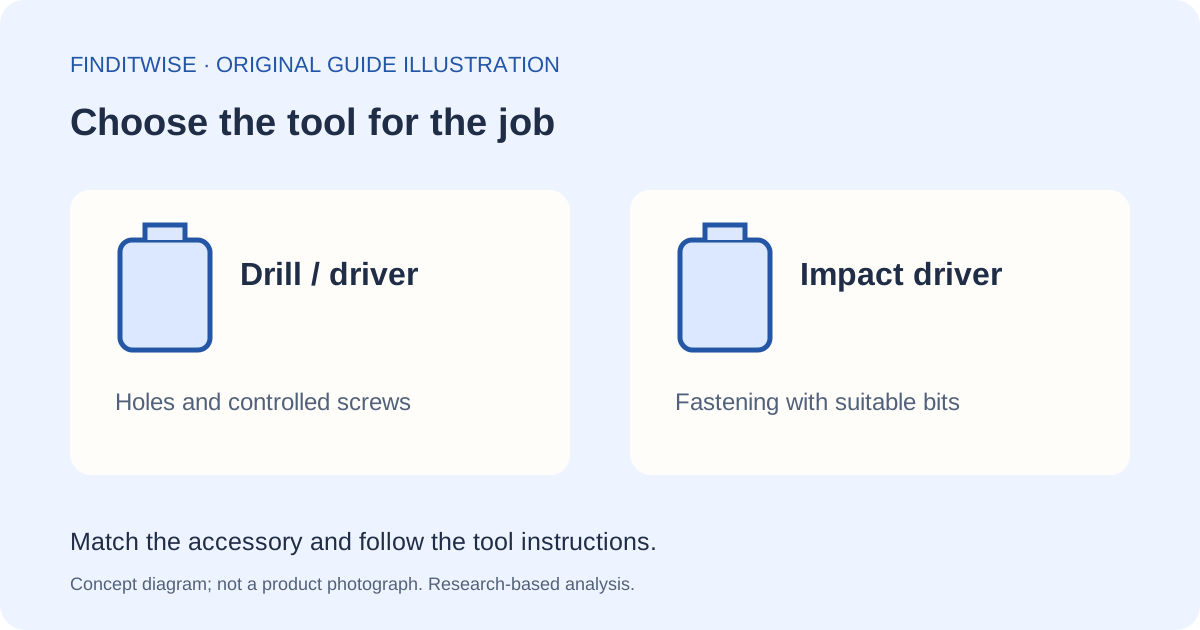
For a first tool intended for both holes and ordinary screwdriving, our research-based starting recommendation is a drill/driver. If your work is mainly fastening, an impact driver deserves a separate look. The decision comes from your workload, not a universal claim that one tool is better.
This guide compares functions. We have not performed a drilling or fastening test, and it is not an assertion about every model sold under either label.
How the mechanisms differ
A drill/driver turns a bit through its chuck. A model with a screwdriving clutch can limit the applied torque at its selected settings. The DeWalt DCD794 manual describes this control and notes that its drill position does not use the clutch.
DeWalt’s impact-tool explanation describes rotational blows rather than only continuous turning force. It also distinguishes the common hex drive of an impact driver from the square drive associated with an impact wrench. Do not substitute an impact wrench simply because both products have impact in their name.
Match the tool to the task
| Your priority | Starting point to research | Check before choosing |
|---|---|---|
| A mix of holes and ordinary screws | Drill/driver | Chuck compatibility, clutch controls, exact material capacities |
| A tool mainly for fastening | Impact driver | Drive type, control settings, suitable accessories |
| Working with large nuts or bolts | A task-appropriate wrench | Exact application instructions; do not infer suitability from this comparison |
These are research starting points, not permission to exceed a manufacturer’s instructions or specified capacities.
Can an impact driver drill holes?
It can in appropriate circumstances: DeWalt’s guidance permits suitable impact-ready bits or a specified adapter. This does not mean every drill bit, adapter, material, and impact driver combination is interchangeable. Check the instructions for the tool and accessory you actually plan to use.
The buying compromise is useful to think about: if your proposed setup needs adapters and a second accessory set just to handle routine drilling, compare it with a drill/driver before deciding it is the simpler first purchase.
Do you need both?
Do not buy two tools solely because they appear together in a kit. List the work each would do, check the exact batteries and charger included, and decide whether both solve a real need. If you expect to switch repeatedly between drilling and fastening, keeping each tool set up for its own role may be convenient; that is a workflow judgement, not a tested productivity claim.
Start with how to choose a cordless drill or compare kit and bare-tool purchases.

Common questions
Were these tools physically tested by FindItWise?
No. This guide uses manufacturer documentation and explicitly identified editorial interpretation. It does not report hands-on test results.
Sources & references
- DEWALT DCD794/DCD799 instruction manual (mode selection and screwdriving) — accessed October 3, 2026
- DEWALT explanation of impact-driver rotational action — accessed October 3, 2026
- DEWALT guidance on drilling with an impact driver — accessed October 3, 2026